Home Care and Fall Avoidance: Keeping Seniors Safe in Their Own Residences
Business Name: FootPrints Home Care
Address: 4811 Hardware Dr NE d1, Albuquerque, NM 87109
Phone: (505) 828-3918
FootPrints Home Care
FootPrints Home Care offers in-home senior care including assistance with activities of daily living, meal preparation and light housekeeping, companion care and more. We offer a no-charge in-home assessment to design care for the client to age in place. FootPrints offers senior home care in the greater Albuquerque region as well as the Santa Fe/Los Alamos area.
4811 Hardware Dr NE d1, Albuquerque, NM 87109
Business Hours
Falls change families. I have sat at kitchen area tables with adult kids who were preparing a mild shift into more assistance for their parents, just to have everything reset over night by a hip fracture or head injury. One mistake in the restroom, one rushed trip to answer the door, and suddenly you are talking about surgical treatment, rehab stays, and whether Mom can ever return home.
The good news is that a lot of severe falls are not random accidents. They typically follow patterns that you can see, determine, and improve. When you combine wise home adjustments with thoughtful in-home senior care, you dramatically lower both the danger of falling and the odds that a fall will result in irreversible loss of independence.
This is the work of modern elder care: not just responding to crises, but quietly developing a safer daily life at home.
Why falls are so unsafe for older adults
For more youthful individuals, a fall typically implies swellings and an aching back. For older grownups, the same fall can set off a cascade of health problems.
As bones lose density and muscles compromise, even a short fall can cause fractures, particularly of the hip, wrist, shoulder, or spine. Recuperating from those injuries needs immobility, and immobility brings its own list of problems: blood clots, pressure sores, pneumonia, loss of muscle mass, and often confusion or delirium.
I have actually seen elders who were strolling independently, driving, and managing their household, lose half their practical capability in the weeks after a fall. Approximately one in three adults over 65 falls each year, and many of those falls never ever appear in any official data due to the fact that nobody goes to the health center. But function and confidence still erode.
There is likewise the psychological side. After a fall, even if injuries are small, numerous older grownups end up being wary of moving. They begin avoiding stairs, strolling less, bathing less often, or giving up activities they delight in. The worry of falling can be simply as limiting as the fall itself.
When you take a look at senior home care from this angle, fall prevention is not a side project. It is central to keeping somebody in their own home, by themselves terms, for as long as possible.
Common patterns behind a lot of falls at home
Every home and every older grownup is various, however particular styles repeat. When I walk into a new client's house for an in-home care evaluation, I can generally identify a few high-risk circumstances within the very first ten minutes.
Environmental dangers play a huge function. Throw carpets that slip on wood floorings, electrical cables stumbling upon walking paths, irregular thresholds, dim hallways, narrow bathroom entrances, and stairs without solid railings all increase the odds of a mistake. Low toilets, high tubs, and soft, sinking couches can be tough to get out of without momentum, that makes losing balance more likely.
Medical elements layer on top of that environment. Modifications in vision from cataracts or macular degeneration, arthritis discomfort, neuropathy in the feet, Parkinson's illness, and the extremely typical combination of slightly low blood pressure and numerous medications can make standing risky. Many prescription drugs and nonprescription medications, particularly sleep help and particular high blood pressure or state of mind medications, boost dizziness or drowsiness.
Then there are behavioral patterns. Moving too fast to answer the phone. Getting up in the evening in the dark to use the bathroom. Using old slippers with used soles. Leaning on furniture instead of using a walker due to the fact that the walker "feels awkward." Bring laundry or a full cup of coffee in both hands on the stairs. Each one appears small, but repeated sometimes a week, the likelihood of a fall climbs.
Home care for parents or grandparents need to ideally start with a frank look at these danger factors, not simply a conversation about how many hours of care are required. The details of how someone moves through their day are where you find genuine chances for prevention.
The distinct function of in-home care in preventing falls
Senior home care is sometimes framed as business for a lonely older adult, or job assist with cooking, bathing, and errands. It certainly includes those things. But for fall prevention, the value of in-home care runs deeper.
First, a caretaker sees the genuine, unfiltered routine. Family members often see their loved one for visits, meals out, or short drop ins. You might notice some unsteadiness, but not the entire photo. An experienced at home senior care supplier spends hours viewing how your parent stands from a chair, browses tight corners, handles the shower, or responds to tiredness near the end of the day. That constant observation enables them to spot subtle modifications in gait, posture, or endurance that indicate increasing risk.
Second, caretakers can act right away in small ways that prevent bigger issues. They can steady a customer while they reach into a high cabinet, motivate a rest before lightheadedness sets in, or gently suggest using the walker instead of the furnishings for assistance. In time, those tiny interventions prevent the "near misses out on" that frequently precede a major fall.
Third, home care creates feedback loops with families and medical providers. When an albuquerque home care agency, for example, has caretakers document modifications after a new medication, the nurse or physician might get a report that the client now seems more lightheaded when standing. That report can result in an earlier medication adjustment, which straight reduces fall risk.
Finally, excellent caretakers assist restore self-confidence in safe movement. Exercises prescribed by physiotherapists are more effective when somebody assists the client remember and perform them correctly. Practicing transfers from bed to chair or from walker to toilet, with a patient and watchful assistant, often brings back both strength and trust in one's body.
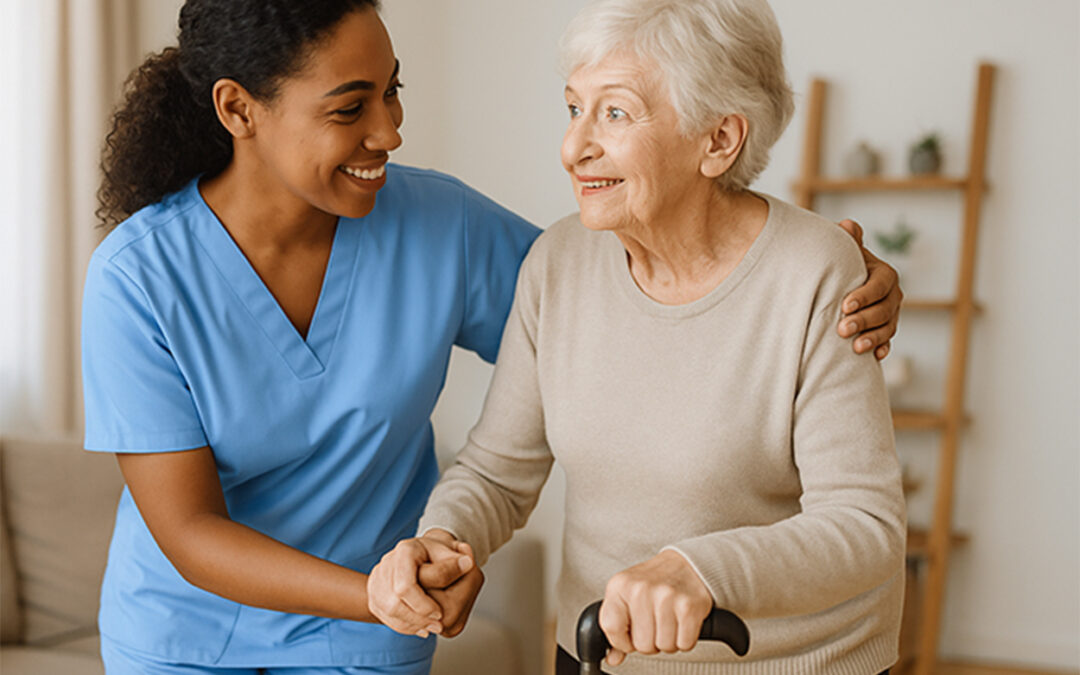
When you combine these elements, in-home care shifts from being a passive safety net to an active tool for fall prevention.
Assessing your parent's fall danger at home
Families often ask for an easy checklist or rating that informs them whether their loved one is likely to fall. There are formal tools that geriatric specialists utilize, but even without them, you can get a good sense by viewing carefully and asking particular questions.
Pay attention to how your parent stands up from a chair. Do they push off heavily with their hands, rock forward a number of times, or need multiple attempts to increase? Do they immediately grab a wall or furnishings to stable themselves? These are signs that strength and balance have actually already declined.
Notice the "turns." Many falls occur not while walking straight, however when turning rapidly to change direction, step off a curb, or pivot to reach something behind. If your parent seems unstable or shuffles their feet throughout these movements, they are more vulnerable.
Ask about dizziness, even if they insist they are "fine." An unexpected variety of older adults stabilize feeling lightheaded when standing, or assume it is an expected part of aging. Ask particularly whether they feel off balance when rising, after utilizing the restroom, or when moving from lying down to standing.
Look at their shoes and strolling aids. Shoes that slip off quickly, have worn soles, or no back support boost risk. If they have a cane or walker event dust in a corner, ask why they are avoiding it. Typically, the problem is that no one has appropriately changed or taught them how to utilize it, so it feels more like a challenge than a tool.
Finally, walk through the home from their point of view, not yours. Try browsing the corridor during the night with only the normal lighting. Step into the shower the way they do. Rest on their favorite chair and stand without utilizing your hands. You will quickly feel where the stress and danger points lie.
An expert home care agency or a physiotherapist can do a more official assessment, but your observations are important. When you later on consult with an elder care professional, included specific examples instead of general worries.
Making the home safer without turning it into a hospital
One of the greatest issues I hear from elders is, "I do not desire my home to appear like a nursing home." That resistance can stop families from making basic changes that significantly enhance safety. The art depends on finding modifications that feel respectful, unobtrusive, and tailored to your loved one's actual lifestyle.
Lighting is often the most convenient win. Older eyes require considerably more light to see the same level of information. Yet lots of homes still count on single ceiling components and dark lamps. Brilliant, diffused lighting in hallways, stairways, and bathrooms lowers bad moves. Movement activated nightlights along the course from bed to restroom permit safe navigation without fumbling for switches.
Bathroom modifications matter more than nearly any other space. A raised toilet seat with arm supports makes standing less unsteady. Sturdy, well anchored grab bars by the toilet and in the shower give reputable handholds. A non slip shower mat and a stable shower chair or bench decrease the need to stabilize on one foot while washing. Taken together, these modifications get rid of a number of the most common settings for severe falls.
Flooring deserves careful attention. Remove or protect loose carpets, particularly near doorways and on top or bottom of stairs. If the flooring transitions abruptly in height from one room to another, consider small, beveled threshold ramps. Animals and their toys can likewise produce tripping risks you would not see up until you are moving slowly with a cane.
Stairs require more than a single railing that wobbles. Preferably, there is a sturdy hand rails on both sides, great lighting at top and bottom, and clearly noticeable edges on each step. In certain homes, specifically multi level Albuquerque houses integrated in earlier years, a stairlift might be worth thinking about if your parent insists on sleeping in an upstairs bedroom.
Furniture can be your ally or your enemy. Really low couches, deep armchairs, and unsteady side tables increase pressure when sitting or standing. In some cases raising a favorite chair by an inch or more with stable risers makes a huge distinction in convenience and safety. Organize furnishings to produce large, clear paths that enable a walker or wheelchair to pass easily, instead of tight zigzags around coffee tables and plants.
Technology should support safety without frustrating or complicated your parent. Basic, loud doorbells, simple to utilize cordless phones, medical alert pendants or watches, and motion sensors in critical locations like front doors or restrooms can all play a role. The goal is not to monitor every relocation, but to ensure that if something does go wrong, aid shows up quickly.
How caretakers incorporate fall avoidance into day-to-day routines
Formal evaluations and home adjustments are very important, however the real work of fall avoidance typically takes place in small, repetitive actions throughout regular days. This is where knowledgeable in-home caretakers make their value.
Morning regimens set the tone. A caretaker who knows their customer well will encourage them to rest on the edge of the bed for a minute before standing, take a couple of deep breaths, and place both feet securely on the flooring. They might hand them their walker before they stand, remind them to utilize the grab bar near the toilet, and ensure sufficient lighting before the customer moves.
Bathing and dressing offer frequent opportunities to reduce risk. A caretaker can check water temperature level and change shower equipment, lay out clothes within easy reach so the client is not twisting or overreaching, and recommend sitting to dress instead of stabilizing on one leg while pulling on trousers. For someone who has currently fallen while dressing, these tweaks can be transformative.
Meal preparation and home tasks can either be minefields or chances to stay active securely. A proficient caregiver will organize often utilized items at waist level to prevent climbing up or flexing, carry much heavier products like clothes hamper or pots of water, and encourage the customer to carry out lighter jobs from a seated or supported position. This preserves self-respect and participation, without inviting injury.
Caregivers likewise play a crucial function in medication awareness. While they do not recommend, they do see the genuine impacts. If a new blood pressure tablet accompanies more regular episodes of lightheadedness, or if a sleep aid results in increased nighttime wandering, a caretaker's observations can trigger timely conversations with health care providers.
Most notably, caretakers support exercise and mobility. Even a brief daily walk inside or outside the home, directed by someone who comprehends the client's limitations, preserves balance and muscle strength. If a physiotherapist has recommended particular workouts, in-home care staff can assist the senior perform them properly and consistently. That repetition is what avoids deconditioning, which is one of the most significant hidden drivers of falls.
When to think about home care specifically for fall prevention
Families frequently wait to employ home care till after a considerable occasion: a hospitalization, an abrupt decrease, or a crisis. From a fall avoidance standpoint, there are earlier indication that suggest it is time to bring in assistance, even part time.
You might see that your parent is reluctant before utilizing stairs, or avoids going to parts of your home they utilized to regular. Perhaps they refuse invites they once accepted, with unclear reasons about being tired. Sometimes you see scuff marks on walls at hip or shoulder level, where they have actually been utilizing the surface area to stable themselves.
If you live in a city with seasonal weather swings, such as Albuquerque, outdoor conditions include another layer. Hot summer seasons and icy winter mornings can limit safe strolling outdoors for months at a time. When an older adult who count on day-to-day walks for physical fitness all of a sudden ends up being housebound, their balance and endurance decline quickly. In-home senior care can help bridge those periods with monitored indoor activity and much safer, scheduled outings.
If your parent has actually recently started on new medications, particularly those for high blood pressure, mood, sleep, or pain, this is also a good time to think about additional support. It prevails to feel a bit "off" while dosages are adjusted. Having someone present throughout this shift minimizes the odds of a medication associated fall.
For some families, the tipping point is subtle near misses out on. A caretaker mother may admit, weeks after the truth, that she "almost went down" in the shower, or that she rested on the flooring when and might not get up without crawling to a chair. Those stories are not just anecdotes; they are warnings. Listening closely and responding proactively is much easier than rebuilding after a fracture.
To clarify your own thinking, it can help to ask yourself a few direct concerns:
- Have there been one or more falls, or frequent "nearly falls," in the previous year?
- Does my parent appear weaker, slower, or more unstable than 6 months ago?
- Is the home environment more difficult to navigate now due to stairs, clutter, or layout?
- Are there brand-new medications, vision changes, or diagnoses that impact balance?
- Am I or other relative feeling anxious about leaving them alone?
If you find yourself answering "yes" to numerous of these, it is reasonable to explore home care choices with fall avoidance as a primary goal, not just a side benefit.
Choosing a home care service provider with a safety mindset
Not all home care companies or private caregivers approach fall prevention in the very same way. When you interview prospective suppliers, listen for how they speak about safety, not simply companionship or task lists.
Good elder care companies develop fall prevention into their training and regimens. They teach caretakers to acknowledge threats in the home, document and report changes in movement, and utilize safe transfer strategies. Ask specific concerns: How do you manage clients who hesitate to utilize their walker? What protocols remain in place for recording and reporting falls or near falls? How typically do you update the care plan if mobility changes?
Local understanding can likewise matter. An Albuquerque home care supplier, for instance, ought to recognize with common functions of location real estate, such as multi level adobe homes, older plumbing layouts, or steep driveways, and understand how to adapt safety strategies appropriately. They need to likewise understand local healthcare resources, like which physical treatment groups or geriatric centers collaborate well with home care.
Look for service providers who treat your parent as a partner, not a things of care. The very best fall avoidance plans are constructed with the client's personality, practices, and choices in mind. A proud previous athlete may react better to "balance training" framed as remaining strong than to cautions about "not falling." Someone who loves gardening may be more happy to do leg workouts if they are tied to being ready for spring planting.
Trust your impulse about whether the agency's agents listen more than they talk. Effective fall avoidance depends upon information that only you and your parent know: the canine that sometimes sleeps on the hallway rug, the back actions that ice over, the practice of getting the mail at dusk when exposure is bad. A company who hurries to standard services without taking in those information might miss out on essential risks.
Partnering as a family without taking over
One of the hardest balances to strike is appreciating a parent's autonomy while safeguarding them from harm. No one delights in feeling policed in their own home. Yet overlooking real danger does them no favors.
I often encourage families to frame safety changes and the intro of in-home care as a way to protect self-reliance, not decrease it. For example, "Having somebody aid with showers two times a week suggests you can keep using this restroom, rather than needing to move," frequently lands better than "You might fall, so we are bringing somebody in."
Invite your parent into the issue fixing process. Stroll through your home together and ask what feels wobbly or troublesome. You might be shocked by their own ideas, such as moving their favorite chair more detailed to the restroom, moving a frequently used lamp, or lastly quiting a particular carpet they secretly hate.
Share responsibility amongst siblings or relatives where possible. Someone can concentrate on coordinating with medical service providers, another on investigating regional senior home care agencies, another on assisting with home modifications. When everyone carries a piece, no single relative becomes the consistent voice of care, which reduces friction.
Finally, review the plan frequently. Fall danger is not fixed. Health conditions progress, seasons change, medications shift, and brand-new practices form. A home that felt safe last year may feel tough now. A caregiver who was at first hired for three mornings a week may require to shift to nights if that is when your parent appears more baffled or unstable.
A much safer course forward
Keeping seniors safe in their own homes is neither a matter of luck nor a single device or gizmo. It is the outcome of lots of collaborated choices: how the home is organized, how medications are handled, how daily regimens unfold, and who exists to help.
When you attentively combine home modifications with well prepared in-home care, you do more than prevent in home care services falls. You support self-respect, confidence, and the quiet freedom to move through familiar rooms without fear. For lots of older adults, that is the difference between merely living at home and truly living well at home.
FootPrints Home Care is a Home Care Agency
FootPrints Home Care provides In-Home Care Services
FootPrints Home Care serves Seniors and Adults Requiring Assistance
FootPrints Home Care offers Companionship Care
FootPrints Home Care offers Personal Care Support
FootPrints Home Care provides In-Home Alzheimer’s and Dementia Care
FootPrints Home Care focuses on Maintaining Client Independence at Home
FootPrints Home Care employs Professional Caregivers
FootPrints Home Care operates in Albuquerque, NM
FootPrints Home Care prioritizes Customized Care Plans for Each Client
FootPrints Home Care provides 24-Hour In-Home Support
FootPrints Home Care assists with Activities of Daily Living (ADLs)
FootPrints Home Care supports Medication Reminders and Monitoring
FootPrints Home Care delivers Respite Care for Family Caregivers
FootPrints Home Care ensures Safety and Comfort Within the Home
FootPrints Home Care coordinates with Family Members and Healthcare Providers
FootPrints Home Care offers Housekeeping and Homemaker Services
FootPrints Home Care specializes in Non-Medical Care for Aging Adults
FootPrints Home Care maintains Flexible Scheduling and Care Plan Options
FootPrints Home Care is guided by Faith-Based Principles of Compassion and Service
FootPrints Home Care has a phone number of (505) 828-3918
FootPrints Home Care has an address of 4811 Hardware Dr NE d1, Albuquerque, NM 87109
FootPrints Home Care has a website https://footprintshomecare.com/
FootPrints Home Care has Google Maps listing https://maps.app.goo.gl/QobiEduAt9WFiA4e6
FootPrints Home Care has Facebook page https://www.facebook.com/FootPrintsHomeCare/
FootPrints Home Care has Instagram https://www.instagram.com/footprintshomecare/
FootPrints Home Care has LinkedIn https://www.linkedin.com/company/footprints-home-care
FootPrints Home Care won Top Work Places 2023-2024
FootPrints Home Care earned Best of Home Care 2025
FootPrints Home Care won Best Places to Work 2019
People Also Ask about FootPrints Home Care
What services does FootPrints Home Care provide?
FootPrints Home Care offers non-medical, in-home support for seniors and adults who wish to remain independent at home. Services include companionship, personal care, mobility assistance, housekeeping, meal preparation, respite care, dementia care, and help with activities of daily living (ADLs). Care plans are personalized to match each client’s needs, preferences, and daily routines.
How does FootPrints Home Care create personalized care plans?
Each care plan begins with a free in-home assessment, where FootPrints Home Care evaluates the client’s physical needs, home environment, routines, and family goals. From there, a customized plan is created covering daily tasks, safety considerations, caregiver scheduling, and long-term wellness needs. Plans are reviewed regularly and adjusted as care needs change.
Are your caregivers trained and background-checked?
Yes. All FootPrints Home Care caregivers undergo extensive background checks, reference verification, and professional screening before being hired. Caregivers are trained in senior support, dementia care techniques, communication, safety practices, and hands-on care. Ongoing training ensures that clients receive safe, compassionate, and professional support.
Can FootPrints Home Care provide care for clients with Alzheimer’s or dementia?
Absolutely. FootPrints Home Care offers specialized Alzheimer’s and dementia care designed to support cognitive changes, reduce anxiety, maintain routines, and create a safe home environment. Caregivers are trained in memory-care best practices, redirection techniques, communication strategies, and behavior support.
What areas does FootPrints Home Care serve?
FootPrints Home Care proudly serves Albuquerque New Mexico and surrounding communities, offering dependable, local in-home care to seniors and adults in need of extra daily support. If you’re unsure whether your home is within the service area, FootPrints Home Care can confirm coverage and help arrange the right care solution.
Where is FootPrints Home Care located?
FootPrints Home Care is conveniently located at 4811 Hardware Dr NE d1, Albuquerque, NM 87109. You can easily find directions on Google Maps or call at (505) 828-3918 24-hoursa day, Monday through Sunday
How can I contact FootPrints Home Care?
You can contact FootPrints Home Care by phone at: (505) 828-3918, visit their website at https://footprintshomecare.com, or connect on social media via Facebook, Instagram & LinkedIn
FootPrints Home Care is proud to be located in the Albuquerque, NM serving customers in all surrounding communities, including those living in Rio Rancho, Albuquerque, Los Lunas, Santa Fe, North Valley, South Valley, Paradise Hill and Los Ranchos de Albuquerque and other communities of Bernalillo County New Mexico.